93
93
Sour natural gas stations are exposed to long-term medium corrosion and complex operating conditions. As a result, process pipelines and pressure vessels are prone to hidden corrosion, wall thinning, and crack defects. These hazards are highly concealed and difficult to identify through visual inspection alone. Without accurate knowledge of corrosion types, defect distribution, and corrosion rates, it is difficult to predict the remaining service life of equipment, which may easily lead to safety risks such as pipeline leakage and equipment failure, directly threatening the stable daily operation and production safety of the station. To address this issue, a precise, systematic, and traceable professional inspection solution is urgently needed to control facility operation safety from the source.
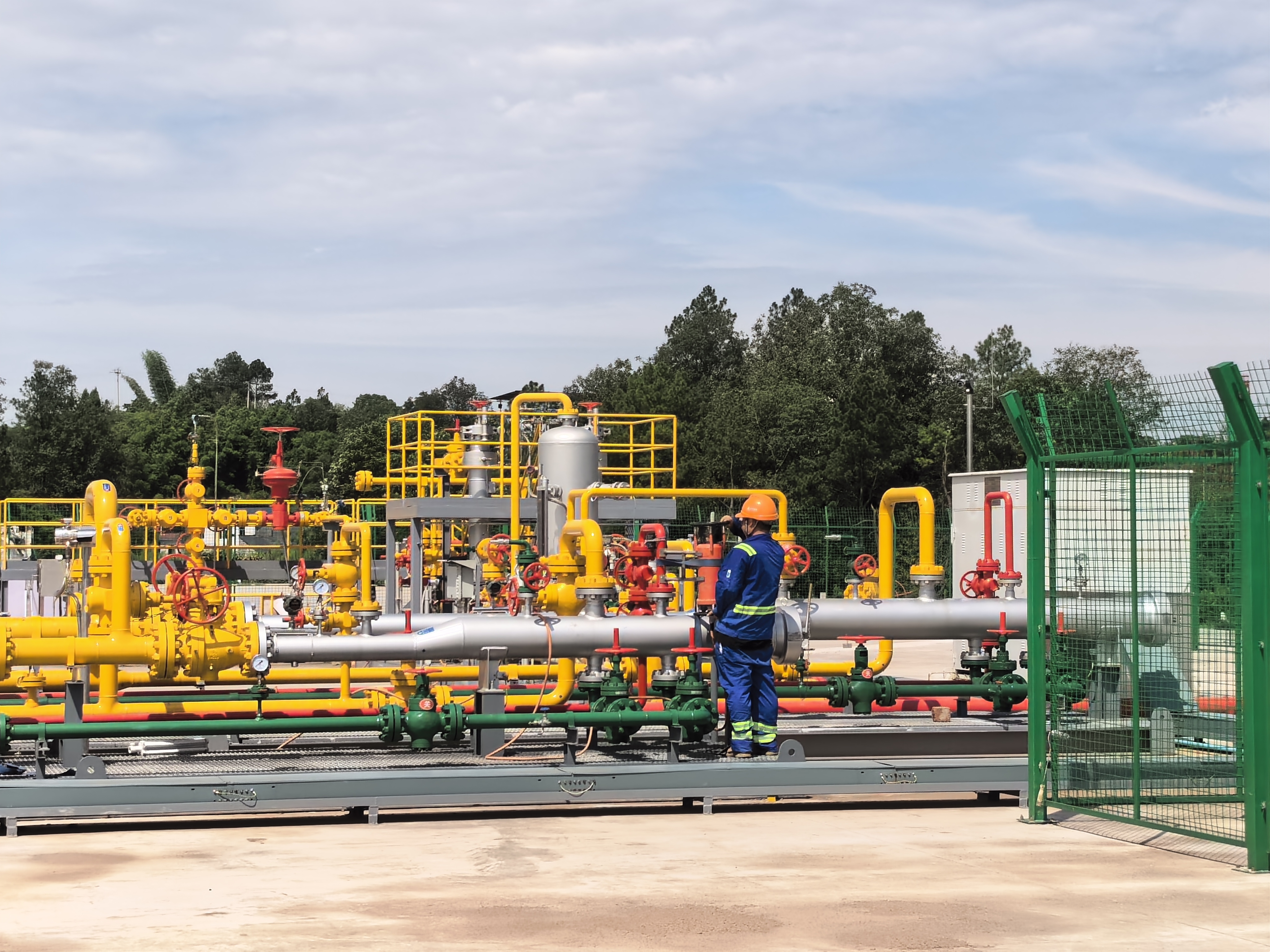
T-ALL Inspection’s NDT team innovatively adopted a combined technical approach of conventional X-ray testing + ultrasonic B-scan + phased array C-scan, forming a full-process, integrated corrosion inspection solution. The solution features the following advantages:
Precise Mapping and Positioning
On site, pipeline isometric drawings are prepared to clarify pipeline routing and gas flow direction, while each weld is assigned a unique number. This enables precise traceability and positioning of defect locations.
Full-Coverage Radiographic Screening
Based on X-ray testing, full-coverage inspection is carried out on the station’s process pipelines to visually screen severely corroded pipe sections and defect locations. Defect levels are evaluated according to relevant standards, and the degree of corrosion is preliminarily determined.
High-Precision Technical Verification
For areas with severe or above-level corrosion, ultrasonic B-scan and phased array C-scan are used for accurate verification. Multiple technologies complement and cross-validate each other, further confirming the actual corrosion condition and significantly improving inspection accuracy.
Scientific Life Prediction
Based on original wall thickness, service years, and measured data, the average corrosion rate is accurately calculated, and the remaining service life of equipment is scientifically evaluated. A standardized and professional inspection report is issued to provide reliable data support for station operation and maintenance decisions.
This multi-technology combined inspection process has achieved significant results in the inspection of process pipelines and pressure vessels at a station in Southwest China. The inspection data was accurate, the results were highly reliable, and the project received strong recognition and positive feedback from the client.
Radiographic testing identified a total of 159 corrosion image locations, with a problem rate of 10%. These covered multiple corrosion conditions including mild, moderate, severe, and serious corrosion, ensuring comprehensive hazard screening with no omissions.
Accurate Review and Verification: Ultrasonic B-scan and phased array C-scan were conducted on 20 severe and above-level corrosion points for review and verification. The results were highly consistent with the radiographic assessment, demonstrating reliable inspection accuracy.
Quantitative Data Analysis: The average corrosion rate of each inspection point was accurately calculated, and the remaining operating life of equipment was scientifically evaluated. This enabled quantitative understanding of facility aging and corrosion degradation patterns, providing precise data support for operation and maintenance, repair planning, and equipment replacement.
Our professional inspection services not only provided reliable assurance for the safe operation of this station, but also demonstrated the company’s technical expertise and innovation capabilities in inspection under sour service conditions. Moving forward, T-ALL Inspection Group will continue to deepen the iteration of NDT technologies, promote the optimization and upgrading of inspection processes, and provide more precise and efficient solutions to continuously solve various challenges in clients’ production operations, safeguarding the safe, stable, and long-term operation of oil and gas stations.