16
16
In June 2026, the renewable energy inspection team of T-ALL Inspection responded swiftly to customer needs and successfully completed the first batch of special re-inspection tasks for wind turbine blades for a renewable energy enterprise in Gansu. This inspection covered three major production bases in Shaoyang, Hunan; Lianyungang, Jiangsu; and Songyuan, Jilin. A full-dimensional re-inspection was completed for three sets of wind turbine blades. Relying on its core Phased Array Ultrasonic Testing (PAUT) technology, the team precisely tackled the technical challenges of detecting internal defects in large composite-material blades, reinforcing the safety line for the reliable operation of wind power equipment through professional technical capabilities. At present, the wind power industry is accelerating toward larger and lighter equipment, with 100-meter-class ultra-long blades gradually becoming mainstream. During operation, blades are subject to significantly increased bending and torsional stresses, placing higher demands on material fatigue performance and structural stability. Small hidden defects generated during manufacturing, assembly, transportation, or hoisting can easily lead to major safety accidents after long-term operation. Industry data shows that among major wind turbine failures, component failure accounts for as much as 68%, while blade failure accounts for 50%, making it the primary cause of wind power equipment failures. High-precision and full-coverage non-destructive testing of blades has therefore become a key part of wind power equipment quality control and operational safety. To address industry pain points such as the complex structure of fiberglass composite wind turbine blades, the difficulty of identifying hidden defects, and the high error rate of manual inspection, T-ALL Inspection adopted an integrated solution combining Phased Array Ultrasonic Testing (PAUT) with an automated scanning system, establishing a standardized and high-precision inspection system. In the early stage, the team used computer simulation to model the response characteristics of various typical defects. Combined with physical specimens containing prefabricated artificial defects, the team carried out dual verification through one-dimensional linear scanning and two-dimensional C-scan imaging. The test results showed that all prefabricated artificial defects were clearly detected, fully demonstrating the reliability of the technology. During this cross-regional on-site inspection, the automated scanning equipment achieved full-size and dead-angle-free scanning of the blades, generating high-definition C-scan imaging maps. These images directly presented the internal bonding condition, material integrity, and minor damage within the blades. Compared with traditional inspection methods, this solution offers significant advantages, including high resolution, a high defect detection rate, intuitive imaging, and traceable data. It effectively solves the high-precision inspection challenges faced during wind turbine blade manufacturing quality control and in-service operation and maintenance, while making up for the technical shortcomings of manual inspection, such as insufficient accuracy and a high missed-detection rate. The efficient completion of this cross-regional, multi-site batch re-inspection task fully demonstrates the comprehensive strength of T-ALL Inspection in rapid response, nationwide service network coverage, and solid technical capability. From the customer’s initial request to the completion of on-site inspections across three regions, the team relied on agile project organization and standardized inspection procedures to minimize equipment waiting time, strongly supporting the production and hoisting schedule of the wind turbine blades. After extensive testing iterations and on-site engineering applications, T-ALL Inspection’s Phased Array Ultrasonic Testing (PAUT) technology has become fully adaptable to multiple models of wind turbine blades and various complex operating scenarios. Its supporting automated inspection equipment can accurately meet the quality inspection needs of wind power projects. Looking ahead, T-ALL Inspection will continue to deepen its presence in the field of renewable energy non-destructive testing, continuously optimize inspection processes, upgrade intelligent inspection equipment, and overcome technical challenges in wind power inspection. With strong technical capabilities, T-ALL Inspection will continue to ensure the safe and stable operation of wind power equipment and support the quality improvement, efficiency enhancement, and high-quality development of the renewable energy industry.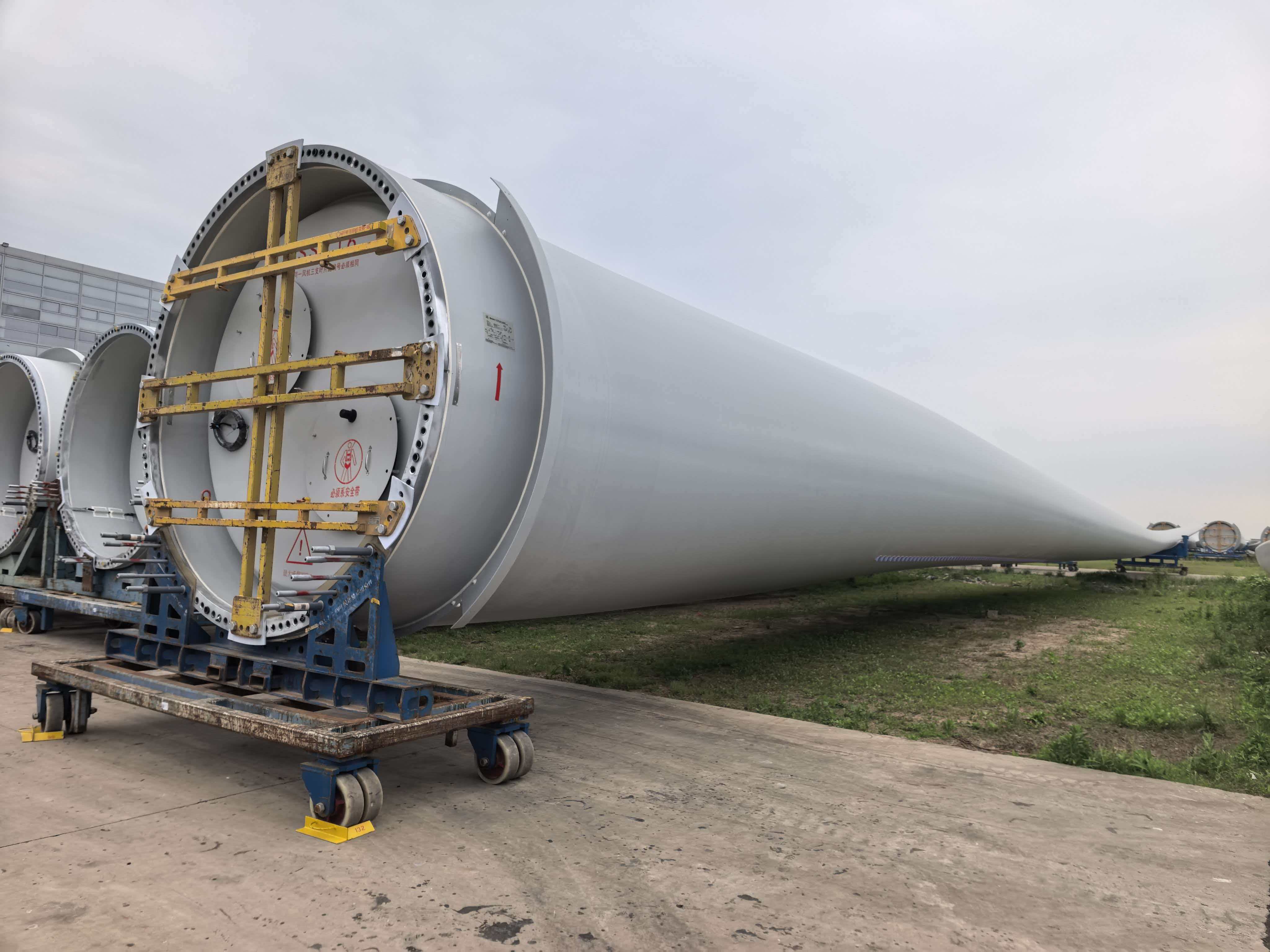
Blade Defects Have Become a Core Safety Risk in Wind Power
Demand for High-Precision Inspection Continues to Grow
Core Technology Empowerment
Precisely Tackling Composite-Material Inspection Challenges
1. Fully Verified and Reliable Technology
2. Efficient and Accurate On-Site Operations
3. Outstanding Core Advantages
Rapid Response and Nationwide Service
Demonstrating Professional Delivery Capabilities
Deepening Its Presence in Renewable Energy Inspection
Safeguarding High-Quality Industrial Development Through Technological Innovation