16
16
From May to June 2026, the T-ALL Inspection leak testing team worked continuously for 55 days and successfully completed the specialized “nitrogen purging + helium-nitrogen leak testing” service during the annual turnaround of a gas purification plant and supporting gas production sites in a high-sour gas field, enabling the facility to achieve zero-leak commissioning. The project covered two major areas: the main purification unit area and the well sites. Through gas purging, toxic gas residues were eliminated, and high-precision helium leak testing was used to inspect all core sealing points, ultimately enabling the facility to achieve safe, one-time zero-leak commissioning.
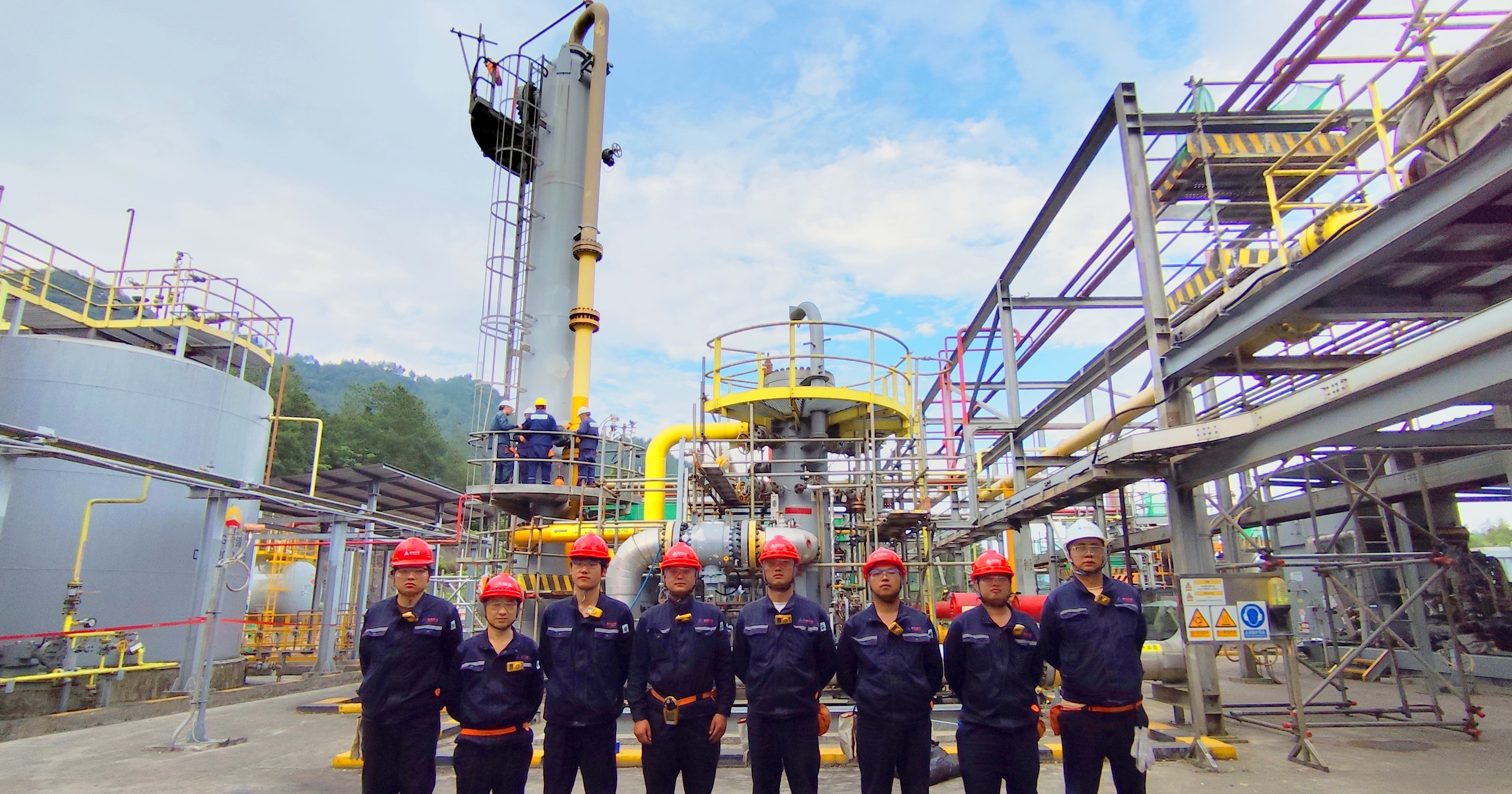
The gas field is a typical high-sour gas field, with peak hydrogen sulfide concentrations reaching up to 100,000 ppm. Under high-pressure operating conditions, even the slightest sealing failure may lead to the release of highly toxic gas and cause a major safety accident. Therefore, “zero leakage” is an absolute safety red line for turnaround and restart. Traditional leak detection methods have limited accuracy and are often unable to identify micro-leakage risks. In contrast, helium-nitrogen leak testing improves detection sensitivity by several orders of magnitude and can accurately capture tiny leak points. It is an indispensable testing method under high-sour and high-risk operating conditions, providing reliable safety assurance for restart.
This turnaround was the largest systematic annual maintenance project in the operating area. The “nitrogen purging + helium-nitrogen leak testing” work was extremely challenging, mainly reflected in three key aspects: “large workload, tight window, and high risk”:
Large workload: The work covered two major areas: the main purification unit area and scattered well sites. The two areas were one hour apart by car, with significant differences in operating conditions and widely dispersed testing points, requiring dual-line operations to be carried out simultaneously.
Tight window: The turnaround window was stringent, and the testing progress of each area directly determined the restart schedule, leaving almost no room for error throughout the process.
High risk: After shutdown, a large amount of high-concentration hydrogen sulfide still remained inside the facility. During pipeline dismantling and equipment opening, if gas purging was not thorough, the lives of on-site personnel would be directly threatened, placing extremely high requirements on construction standards.
Faced with these three challenges, the T-ALL Inspection leak testing team relied on years of accumulated practical experience and quickly developed a highly targeted customized work plan. At the front end, purging was used to thoroughly eliminate operational risks; at the back end, precision leak testing was used to verify sealing integrity, ensuring that every step from the source to the terminal was precise and controllable. During implementation, multiple measures were adopted:
Standardized purging for detoxification: A cyclic purging process was adopted to repeatedly replace the gas inside the equipment, keeping the residual hydrogen sulfide concentration stably below 10 ppm and completely eliminating the risk of poisoning during maintenance operations.
Scenario-based precision leak testing: Portable helium mass spectrometer leak detectors were deployed at scattered well sites to meet the needs of frequent site transfers; in the main purification unit area, benchtop leak detectors were used together with long-distance sniffer probes to conduct full-coverage inspections of key sealing points such as welds, flanges, and instrument connections.
Intelligent equipment for efficiency improvement: Intelligent leak testing equipment equipped with a wireless data transmission system was upgraded and deployed, enabling multiple terminals to view leak rate data in real time and trigger automatic alarms. This achieved “testing while moving, instant leakage identification,” greatly improving operational efficiency.
Seamless zoning coordination: A “zoned testing, zoned acceptance, and zoned commissioning” model was implemented, enabling close coordination among maintenance, leak testing, commissioning, and startup, while minimizing shutdown time.
After 55 days of continuous hard work, the project was successfully completed and delivered excellent results: zero safety incidents were achieved throughout the entire process; nearly 3,000 points were tested through helium-nitrogen leak testing; 78 leak points were identified; and all leak points passed re-testing after rectification. After commissioning, the facility maintained stable zero-leak operation. Meanwhile, through refined construction organization, the helium-nitrogen leak testing work was completed three days ahead of schedule, effectively shortening the restart cycle, reserving sufficient buffer time for subsequent processes, and ensuring that the gas field resumed operation as planned.
In the future, T-ALL Inspection will continue to iterate and upgrade its integrated core technology of “nitrogen purging + helium-nitrogen leak testing,” further deepen its presence in the field of energy asset integrity management, and safeguard the safe and high-quality development of the energy industry with standardized and robust services.