141
141
Recently, during the commissioning and trial-operation phase of a large petrochemical facility, a heat exchanger suddenly developed a leak. Hydrogen was detected escaping at the site, accompanied by signs of a potential fire hazard, creating a serious risk of fire and explosion. The facility responded immediately by activating its emergency response procedures, shutting down the unit, and initiating a comprehensive investigation.
Upon receiving an urgent request for support from the client, T-ALL Inspection’s leak testing team mobilized personnel and equipment overnight and rapidly arrived at the site. Helium-nitrogen leak testing commenced that same night, with the team remaining on site throughout the repair process. After the repairs were completed and the equipment passed the follow-up testing, the unit successfully resumed operation, bringing this emergency inspection assignment under high-risk conditions to a successful conclusion. This race against time once again demonstrated T-ALL Inspection’s technical service capabilities in hazardous and complex operating environments.
During the initial operation of the petrochemical unit, both the equipment and process media were under high-temperature and high-pressure conditions. The sealing reliability of the heat exchanger was therefore directly related to the safe operation of the entire unit. As hydrogen was involved in this incident, exceptionally high standards were required for both the speed and accuracy of the inspection. Rapidly identifying the source of the leak and eliminating the hazard were essential prerequisites for the safe resumption of operations.
During this emergency repair and inspection assignment, the T-ALL Inspection team faced multiple practical challenges, primarily in the following three areas:
01 A Highly Restricted Work Window
Every hour of shutdown could result in production losses and significant economic impact. With an urgent deadline for restarting the unit, inspection, troubleshooting, and repair activities had to be seamlessly coordinated and completed within an extremely limited timeframe. This placed stringent demands on the team’s response efficiency and operational pace.
02 Highly Concealed Leak Points
The heat exchanger featured a sophisticated and complex internal structure, with numerous densely distributed sealing points across tube bundles, welds, and other components. Conventional inspection methods could not accurately identify all potential defects and carried a high risk of missed or incorrect diagnoses, making the investigation particularly challenging.
03 Complex and Hazardous Site Conditions
Even after the unit was shut down, residual process media remained inside the equipment. The work environment involved hazardous confined-space conditions, presenting a comprehensive test of the inspection personnel’s technical competence, procedural compliance, and ability to respond effectively to changing site conditions.
Faced with this complex and urgent situation, the team drew on its extensive experience in inspection services for high-risk oil and gas environments. A dedicated leak detection strategy was rapidly developed, and standardized, professional, and efficient operations were implemented to ensure the complete elimination of all identified hazards.
01 Rapid Mobilization and Site Deployment
At 6:00 p.m. on the day the emergency support request was received, the team immediately coordinated the deployment of inspection engineers, helium leak detection instruments, and personal protective equipment. All personnel arrived at the project site the following morning, and helium-nitrogen leak testing commenced that evening. From receiving the assignment to mobilizing on site, the entire response took less than 24 hours. The team remained fully engaged throughout the repair process until all hazards had been eliminated and the equipment was ready to resume operation.
02 Precise Leak Location Using Helium Testing
The team applied high-precision helium mass spectrometer leak detection technology to conduct comprehensive, point-by-point inspections of critical locations, including heat exchanger flanges, welds, and sealing interfaces. Supported by advanced inspection equipment and extensive technical expertise, the team successfully detected minute internal leakage defects, accurately located the leak points, and determined the severity of the leakage, providing reliable data to guide the subsequent repair work.
03 Close Coordination During Emergency Repairs
Throughout the inspection, the team continuously updated and shared leak detection data. Information regarding the location and condition of each leak was promptly communicated to the client and the repair contractor. This prevented unnecessary dismantling and ineffective repair work, significantly shortened the overall repair schedule, reduced production losses caused by the shutdown, and removed a critical obstacle to the efficient resumption of operations.
04 Follow-up Testing and Closed-loop Verification
After the repair work was completed, the team strictly followed applicable industry safety standards and conducted comprehensive follow-up testing on the original leak points and surrounding associated sealing locations. The results confirmed that the sealing performance of the equipment fully met the required standards and that all identified hazards had been completely eliminated. This established a closed-loop process covering “inspection, troubleshooting, repair, and verification,” providing the final safeguard for the safe and stable operation of the unit.
The client closely monitored and supervised the entire leak investigation, emergency repair, and acceptance process. T-ALL Inspection received high praise and full recognition for its rapid emergency response, dedicated work ethic, and accurate and efficient inspection capabilities.
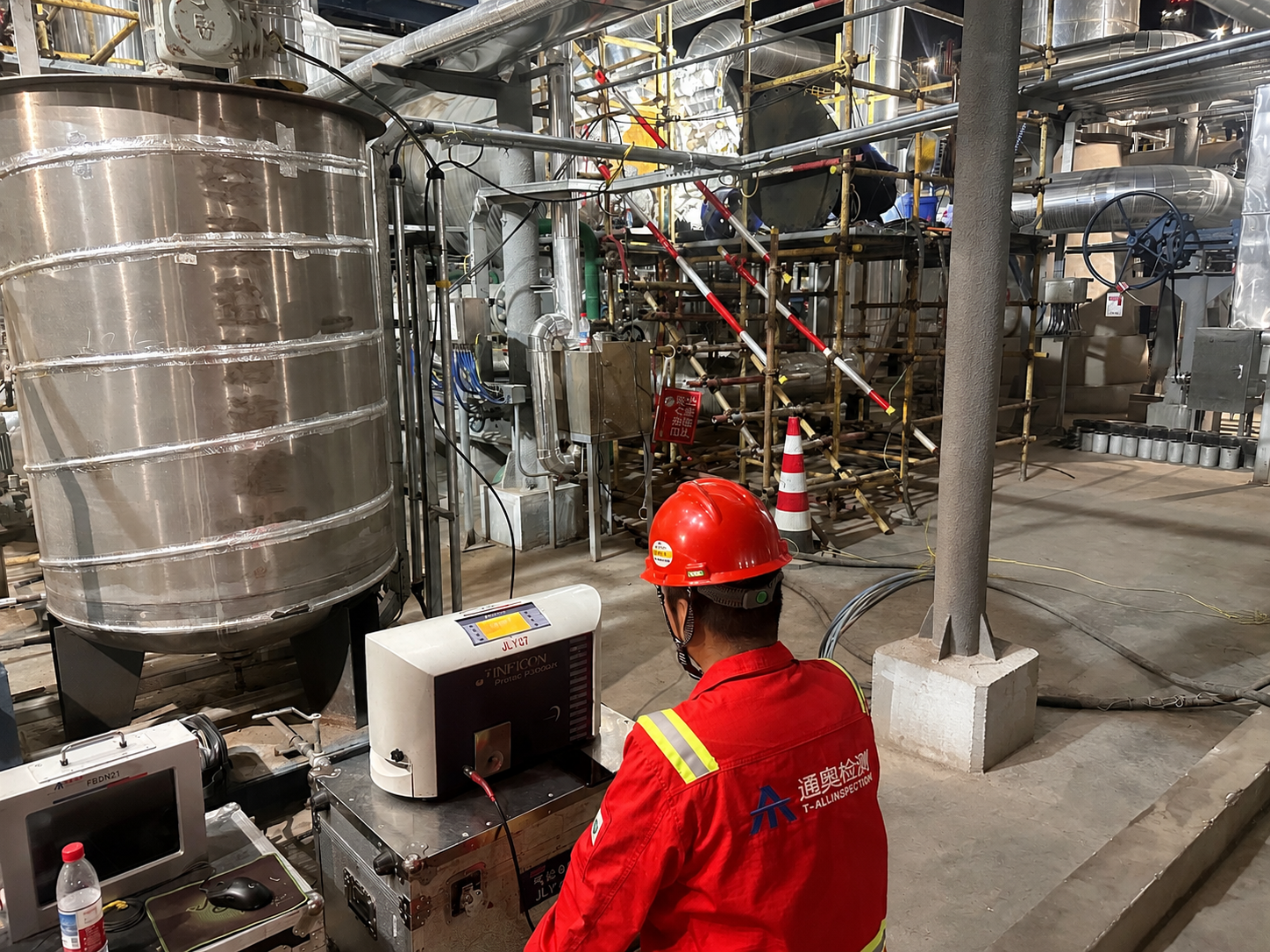
The successful completion of this emergency assignment represents another landmark field application of T-ALL Inspection’s helium-nitrogen leak testing technology for industrial facilities.
We firmly believe that every precise and efficient leak detection operation provides vital protection for the safe production of industrial facilities and represents the fulfilment of our commitment to every client who places their trust in us.