121
On September 4, 2026, T-ALL Inspection Group’s Southwest NDT Team successfully completed the shutdown tie-in inspection for a D720 gas pipeline relocation project in China. The operation covered nine separate work sites and ensured that the pipeline was commissioned on schedule, laying a solid foundation for its continued safe operation.
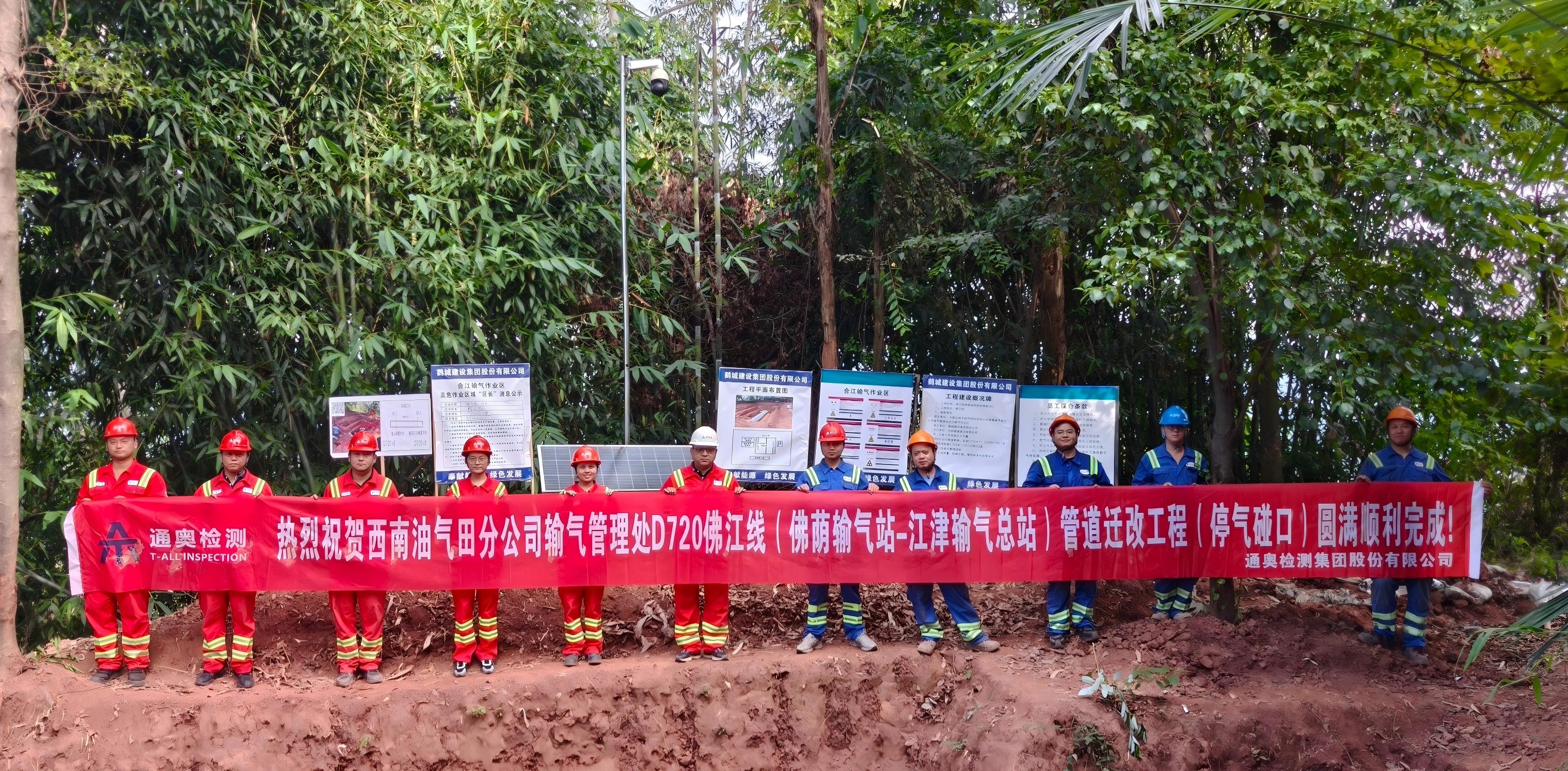
The shutdown tie-in was a critical welding stage of the pipeline relocation project, and the quality of the tie-in welds directly affected the operational safety of the gas pipeline. If weld defects were not properly identified and controlled, weld failure could occur after commissioning, potentially resulting in gas leakage, fire or explosion. Such incidents could threaten the safety of surrounding areas, cause unplanned pipeline shutdowns and directly affect the stability of the regional gas supply.
Compared with routine inspection operations, the main challenge of this project was the large number of widely dispersed work sites. Four key difficulties were involved:
The work sites were widely dispersed, with long distances between them and complex outdoor terrain. Each tie-in required its own personnel and equipment. A delay at any single location could affect the scheduled commissioning of the entire pipeline, creating significant overall project risk.
The schedule was extremely tight, with a fixed pipeline commissioning deadline. If weld defects were identified, repairs and re-inspections had to be completed immediately, leaving very little room for delay.
Continuous field operations were constrained by demanding outdoor conditions. Long hours of high-intensity work placed exceptional demands on personnel endurance and the consistency of on-site quality control. Any delay at one location could affect the overall project delivery schedule.
Quality requirements were stringent. If any weld inspection data was considered questionable, the weld had to be re-inspected, and quality-control standards could not be relaxed at any stage.
To meet the project’s special requirements, the project team began dedicated preparations in advance. All work permits were completed, the specialised execution plan was repeatedly reviewed and refined, and safety and technical briefings were conducted at every level. Personnel, equipment, tools and mobile support resources were assigned across all nine work sites, ensuring that every responsibility was clearly defined and traceable.
After field operations began, unexpected weld repairs and re-inspections were required. Nevertheless, the team maintained the overall schedule through centralised coordination by project management. All inspectors worked continuously while strictly upholding quality standards. Non-conforming welds were immediately repaired and re-inspected, while any questionable inspection data was promptly reviewed. Inspection standards were never compromised, and close coordination among the work teams ensured simultaneous progress across all nine sites.
Ultimately, all pipeline tie-in inspections were completed to a high standard and successfully delivered. The entire inspection assignment was completed with zero errors, and the team’s rigorous quality control and efficient field execution received full recognition from the client.
This project was a practical test of the team’s ability to conduct simultaneous operations across multiple sites, coordinate across different work groups and organise complex inspection assignments. It clearly demonstrated the commitment of T-ALL inspectors to upholding safety standards and putting clients first.
Going forward, T-ALL Inspection will continue to maintain a practical and rigorous approach, complete oil and gas pipeline inspection assignments in accordance with stringent quality standards, and safeguard the continued safe operation of energy infrastructure.